United States
 Australia
 United Kingdom
 Europe
 New Zealand
 Canada


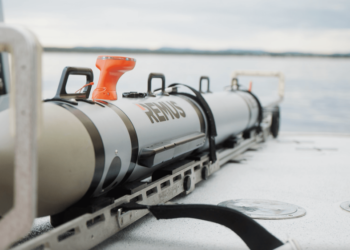
HII has completed another successful demonstration of shipboard deployment and recovery of a REMUS unmanned underwater vehicle using its Sea Launcher automated system, marking progress toward routine, repeatable autonomous maritime operations across manned and unmanned fleets. An April 2026 assessment by McLane underscored the urgency of integrating such capabilities, which aim to let sailors and commanders easily launch and recover UUVs from a variety of platforms without unnecessary risk.
In recent testing, the company validated key elements of a fully autonomous, end-to-end launch and recovery of a REMUS 620 from a representative ship configured for real-world mission conditions. The work addresses a critical hurdle to scaling unmanned systems: reliably getting vehicles into and out of the water while minimizing hazardous deck operations.
“This is proven technology applied in a highly relevant shipboard configuration,” said Duane Fotheringham, president of Mission Technologies’ Unmanned Systems business group. “REMUS has successfully performed autonomous line capture and recovery for years. What this demonstration shows is how seamlessly that capability integrates with automated launch and recovery systems onboard manned or unmanned vessels to support modern maritime operations.”
Sea Launcher is designed to automate the ship-to-vehicle interface, extending autonomy beyond the UUV itself and improving operational efficiency. Repeatability across missions, platforms and environmental conditions is a central objective as the U.S. Navy and allied forces move toward integrated fleets operating on the surface and undersea.
The REMUS family brings maturity to the effort, with vehicles used by more than 30 navies for missions including mine countermeasures, undersea survey, intelligence collection and environmental sensing. A modular design and open architecture allow REMUS systems to operate independently or alongside crewed ships and other unmanned platforms.
HII’s ROMULUS family of unmanned surface vessels is now in production, and the company plans to continue integrating REMUS with ROMULUS and other manned and unmanned vessels. In that concept, a ROMULUS USV equipped with Sea Launcher and REMUS could serve as a mobile host that transports UUVs into an operating area, deploys them for undersea missions and recovers them with greatly reduced direct human involvement.
Such combinations are intended to distribute sensing and mission capability across wider areas while keeping sailors and higher-value crewed platforms farther from danger. The approach reflects manned-unmanned teaming aimed at giving sailors more reach, more platforms and more operational options.
Achieving scale across vast maritime regions such as the Indo-Pacific requires autonomy that encompasses deployment, recovery and sustainment, not just navigation and mission execution. By pairing proven undersea autonomy in REMUS with an automated ship-to-vehicle interface in Sea Launcher—and extending those capabilities via ROMULUS—HII is advancing toward persistent, distributed manned-unmanned operations.